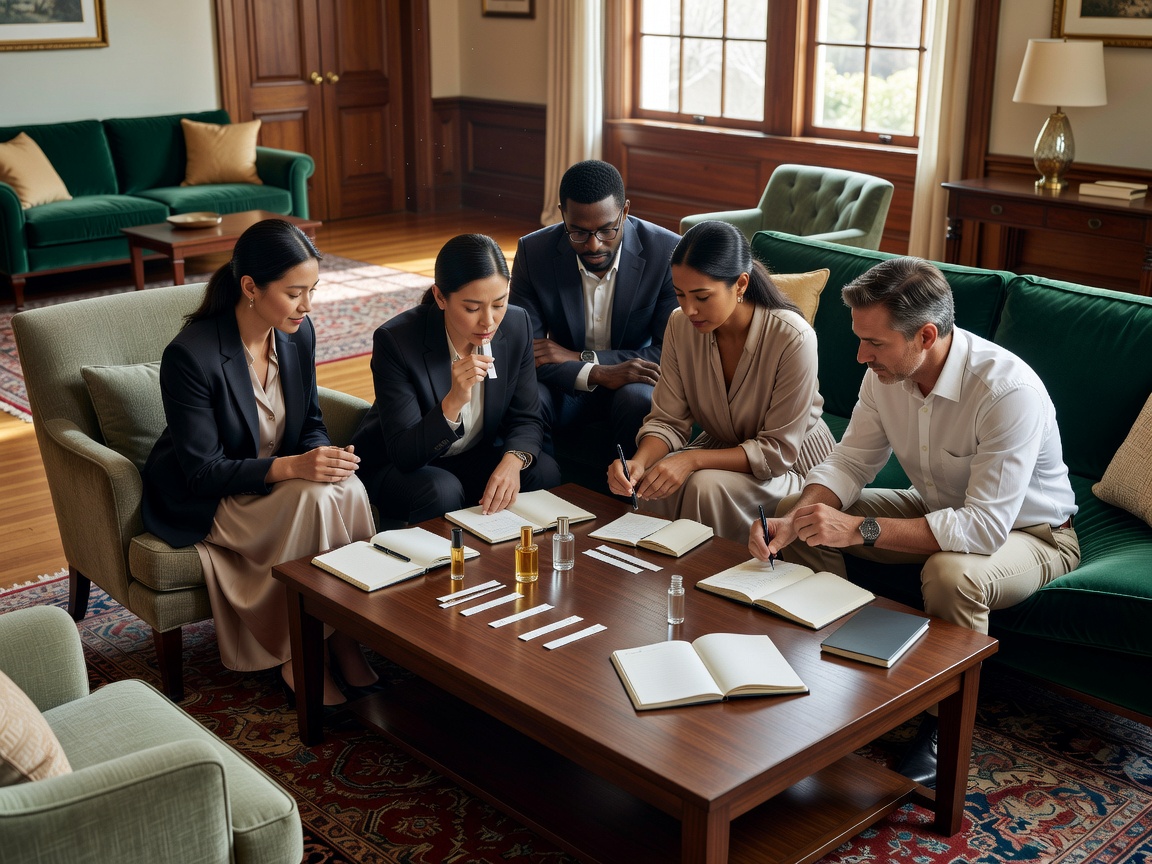
Agree the question the trial must answer
A trial is more useful when it asks whether a specific direction suits a specific space, rather than whether people generally like a fragrance. Return to the room brief and identify the qualities under evaluation. A lobby trial might ask whether the atmosphere feels composed without becoming intrusive at reception. A private sitting room might prioritise compatibility with daily routines and comfort during a long evening.
Decide who can stop the trial and what will trigger a pause. An occupant reporting symptoms, a spill, equipment malfunction or migration into a protected unscented area should not wait for a design review. Explain how concerns can be raised privately. Participation in feedback should be voluntary, and people should not need to disclose a diagnosis to request an alternative or report discomfort.
Record the unscented baseline
Observe the room before adding fragrance. Note existing odours, cleaning products, occupancy, open doors and the operating state of ventilation. Record the positions used for assessment so that later observations can be compared. The baseline is not necessarily odourless; it is the actual room without the proposed added scent. That distinction keeps a trial grounded in the building rather than in an unrealistic neutral environment.
Photographs and a simple annotated plan can help, provided they do not unnecessarily identify guests or staff. Keep the record proportionate. A fragrance trial rarely needs detailed personal health information or identifiable accounts of an individual’s movements. Aggregate operational observations where possible and follow the organisation’s own privacy and workplace procedures when collecting staff feedback.
Make creative comparisons fair
Present sample codes without persuasive names or elaborate stories when practical. Use the same intended evaluation format and follow the supplier’s instructions. Do not compare one sample freshly applied with another that has been standing for a different period and treat the result as a formula verdict. Include fresh-air breaks, avoid an excessive sequence of samples and allow evaluators to record uncertainty.
Ask participants to write independent observations before a group discussion. This reduces the influence of the most senior or enthusiastic person in the room. Record character, perceived intensity, comfort and suitability separately. A sample can be well liked yet unsuitable for a bedroom, or less distinctive in isolation yet more successful as a restrained background in a lounge.
Change one meaningful variable at a time
For the on-site stage, use the intended finished product and an agreed operating method. Record device position, settings, schedule and refill identity, along with relevant room conditions. If the team changes the formula, equipment location and output together, the next observation will be difficult to interpret. Adjust deliberately and document why the change was made.
Evaluate at the entrance, at occupied seating and at staff workstations. Include the boundary of adjacent spaces and return after ordinary operation has continued. The person who installed the system may become less aware of the odour through adaptation, so their impression alone is insufficient. Equally, a strong first impression is not evidence of a beneficial effect or a reliable measure of airborne concentration.
Keep safety review distinct from preference research
Obtain relevant product instructions, applicable safety documentation and supplier confirmation of intended use before the trial. A questionnaire cannot establish toxicological safety or compliance. Where the building or product raises technical questions, involve competent occupational, indoor-air, fire or facilities professionals. The World Health Organization’s indoor-air guidance and Ireland’s Health and Safety Authority are useful starting points for broader context, not fragrance approval services.
Do not describe a successful trial as proof that a product is hypoallergenic, universally safe or therapeutic. Fragrance preferences and sensitivities vary, and a small evaluation group cannot represent every future occupant. An accessible plan includes practical alternatives, a clear complaint route and the ability to remove the source. Where someone feels unwell, pause exposure and follow the site’s response procedures rather than asking them to continue testing.
Approve a record, not just a smell
The final decision should identify the approved product, supplier, delivery method, location, settings and responsible team. Include maintenance instructions, the documents reviewed, unresolved limitations and a review trigger. Seasonal ventilation changes, renovations, new cleaning products or repeated concerns can all justify reassessment. A formula name alone does not tell a future manager how the original approval was reached.
Allow three valid outcomes: proceed within documented conditions, revise and retest, or do not introduce fragrance. Retain an unscented comparison where useful and avoid treating sunk development effort as a reason to ignore new evidence. The strongest trial process protects the room’s purpose and its occupants, even when the result is a simpler atmosphere than the team first imagined.